
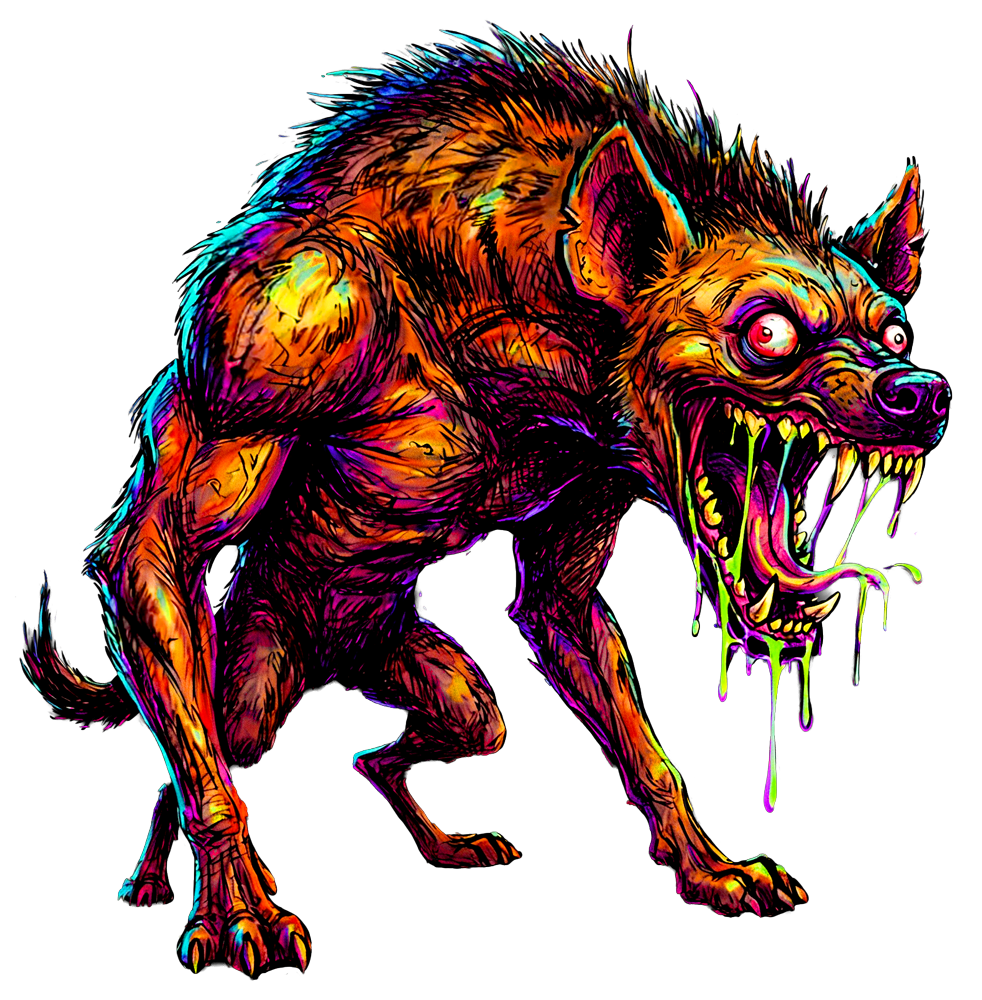
Shunka Warak'in
Type: Folkloric night predator
Region: Plains and Rocky Mountain regions of North America; associated with Ioway and other Plains traditions
Description: Shunka Warak’in is described as a wolf-like nocturnal predator whose presence feels subtly but unmistakably wrong. Its name is commonly translated as “carries off dogs,” capturing both its behavior and the fear it inspires. Witnesses describe an animal that does not fully match known wolves, cougars, or coyotes, often noting unnatural proportions, an unfamiliar gait, and disturbing vocalizations sometimes likened to warped or almost humanlike cries. Rather than a clearly defined species, Shunka Warak’in appears in accounts as a recurring threat—glimpsed briefly at the edges of firelight or heard just beyond the boundary of safety.
Behavior: Shunka Warak’in avoids dramatic confrontations and daylight encounters, behaving instead as a calculated nocturnal opportunist. It is most often associated with the disappearance of dogs and livestock near camps, ranches, and homesteads. The creature is rarely seen clearly; its presence is inferred through vanishing animals, disturbed ground, unfamiliar tracks, and a lingering sense of unease. The fear it creates builds over time, as repeated signs suggest something intelligent is exploiting human boundaries without revealing itself.
Cultural Significance: Shunka Warak’in originates in Indigenous Plains folklore, particularly within Ioway tradition, where it was viewed as a dangerous but natural predator rather than a supernatural being. The legend reflects practical concerns tied to survival and livestock protection on the frontier. During the late 19th and early 20th centuries, settlers adopted and reshaped the story after encountering unfamiliar carcasses that did not resemble known animals, embedding the creature into frontier mythology. Today, Shunka Warak’in frequently appears in cryptozoology literature and documentaries as an example of how Indigenous oral traditions and settler interpretations can merge into enduring folklore centered on the fear of the untamed landscape.