
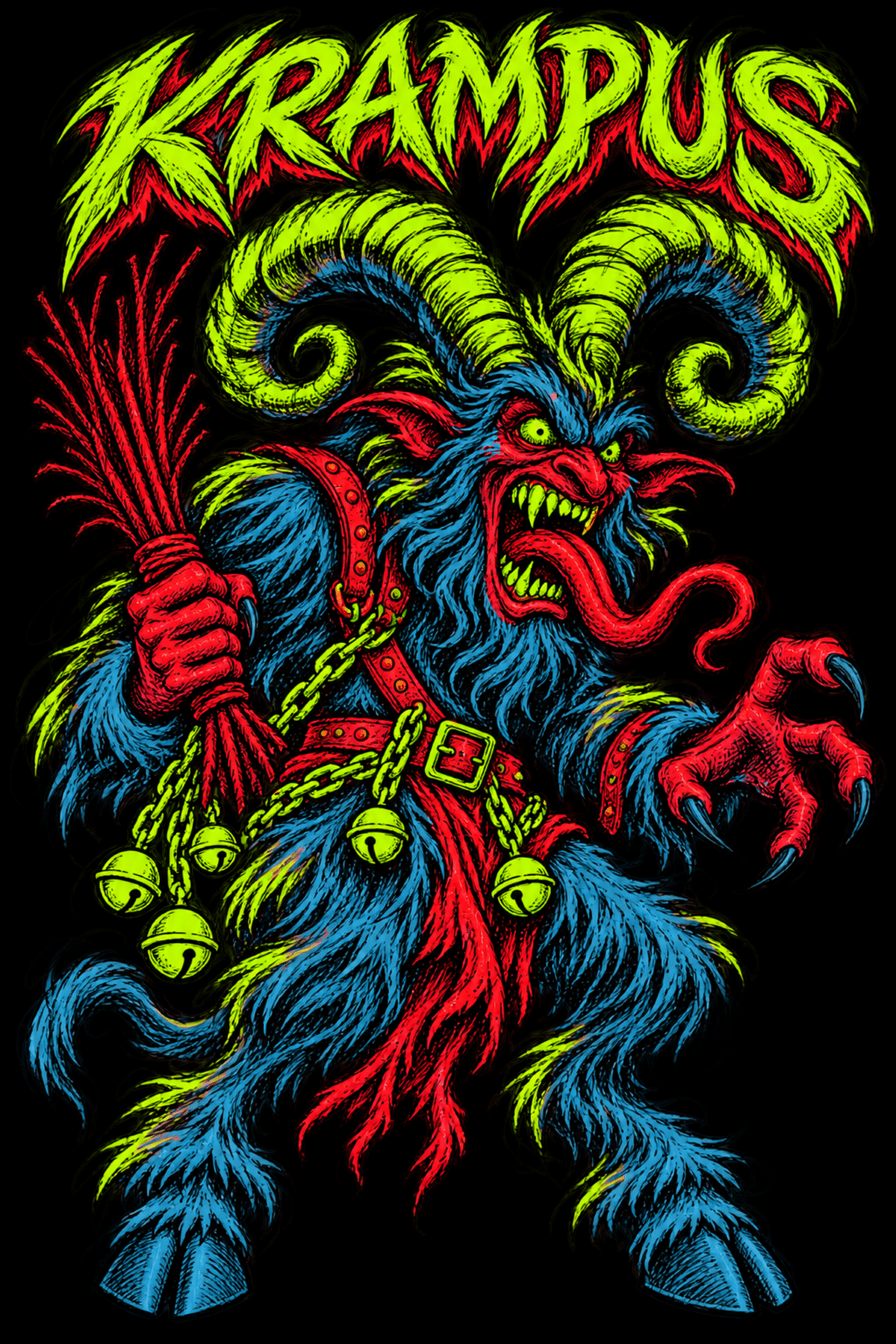
Krampus
Type: Alpine folklore / horned winter figure
Region: Austria, Bavaria in southern Germany, South Tyrol in northern Italy, and neighboring parts of Central Europe.
Description: Krampus is the shaggy, horned figure lurking on the less cheerful side of the holiday season. Often portrayed with hooves, a long red tongue and an intimidating grin, he accompanies Saint Nicholas as a warning to misbehaving children. Nicholas brings the treats. Krampus brings a very different sort of motivation.
His familiar costume includes thick fur, animal horns, clanking chains, heavy bells and a bundle of birch switches. Many traditional masks are carved from wood, though his appearance changes from one community to another. In parts of South Tyrol, even a cloth face covering with a long red tongue can stand in for an elaborate demon mask. There’s no single official Krampus look, but subtlety rarely seems to be the goal.
Behavior: Krampus is most closely associated with December 5, known as Krampusnacht, or Krampus Night, on the eve of Saint Nicholas Day. In the stories, he threatens or punishes naughty children while Nicholas rewards the well-behaved. Some versions give him a basket or sack for carrying troublemakers away.
Today, costumed performers bring him into village streets, Christmas markets and processions. The bells often announce trouble before the horns come into view. Some events feature a small group accompanying Nicholas; others fill the streets with masked figures. Customs vary: in Austria’s Gastein Valley, Krampus can represent a force that drives evil away rather than simply embodying it.
Cultural Significance: Krampus is part of a living tradition of winter performance, mask-making and community celebration. His history is closely tied to European Saint Nicholas customs and devil characters in religious theater. Some popular stories give him ancient pagan or Norse origins, but those claims aren’t established history.
In Bad Mitterndorf, Austria, a Saint Nicholas play featuring Krampus is performed every December 5. Written records reach back to the nineteenth century, with an earlier oral tradition behind them. Its carved masks, fur costumes, bells and rehearsed performances show how much craftsmanship and community work sit behind the frightening faces. The play is included in Austria’s national inventory of intangible cultural heritage. For all his teeth and noise, Krampus is also something people gather to create and pass down.
Research: Library of Congress, South Tyrol, and Austrian UNESCO Commission.